Choosing The Right Home Type In The Energy Corridor
April 16, 2026
April 16, 2026
If you are trying to decide between a condo, townhome, or single-family home in the Energy Corridor, you are not alone. This part of west Houston offers a wide mix of housing, and the right fit depends less on labels and more on how you want to live day to day. When you understand how maintenance, parking, outdoor space, and total monthly cost can vary, you can make a smarter move with more confidence. Let’s dive in.
The Energy Corridor is more than an employment hub. According to the Energy Corridor District, the area includes major employers, residential communities, shopping, dining, parks, trails, and mixed-use development, giving you several lifestyle options in one location.
It also stands out for outdoor access. The district’s trail network connects residential areas to parks, restaurants, community resources, and the Barker and Addicks Reservoirs, which can be especially appealing if you want a shorter commute and easier access to walkable or bike-friendly routes.
Housing options are broad here as well. The district notes that the area includes private and gated communities, single-family homes, townhouses, and other residential choices, with an average home cost around $500K.
Before you focus on square footage or list price, think about how you want your home to function. In the Energy Corridor, buyers are often balancing commute goals, upkeep, privacy, storage, and access to nearby amenities.
A good first question is simple: how much home maintenance do you actually want to handle? If you travel often or want a lower-touch setup, your ideal choice may look very different from someone who wants more outdoor space and direct control over the property.
A condo usually gives you ownership of the individual unit plus a shared interest in common areas, amenities, and parts of the building or property. The National Association of Realtors consumer guide notes that condo associations often handle shared structures and common elements, and that can include items such as roofs, driveways, or other communal features.
Parking can work differently in condo communities than many buyers expect. Freddie Mac guidance explains that parking spaces or storage areas may be limited common elements, which means they may be assigned for your use without being fully separate private property.
Condos are often the most maintenance-light option. That can make them a practical choice if you want easier lock-and-leave living, especially in an area like the Energy Corridor where trails, restaurants, offices, and mixed-use destinations can support a more convenience-focused lifestyle.
That said, lower maintenance is not automatic. The exact experience depends on what the association covers, how dues are structured, and how the community handles reserves and shared components.
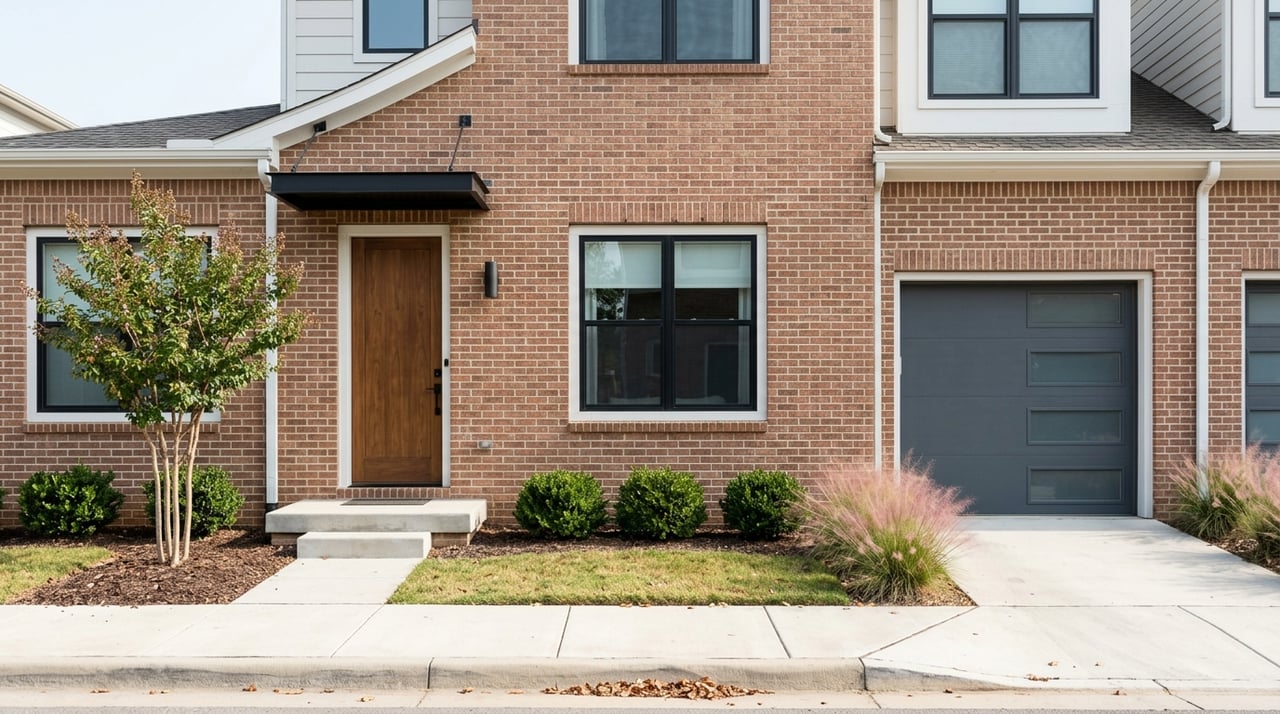
A townhouse or townhome is generally a home attached to one or more neighboring homes by a common wall. Freddie Mac describes townhouses as homes in a row of similar houses or attached by a common wall, which helps explain why they often feel like a middle ground between condos and detached homes.
Many buyers like townhomes because they can offer features that feel closer to a single-family home, such as multiple bedrooms, a garage, or a small yard or patio. They may also provide a more approachable entry point than some detached homes, depending on the community and location.
Townhomes can vary a lot from one community to the next. In some neighborhoods, the HOA may handle landscaping or parts of the exterior. In others, your responsibilities may be broader.
That is why it is important to confirm who is responsible for the roof, exterior walls, parking, and outdoor areas. A townhome can be a great middle-ground option, but the details matter.
A single-family home usually includes the lot the home sits on, which often gives you more direct control over outdoor space and day-to-day property use. In practical terms, this home type often offers the most privacy, the most flexibility for parking, and the greatest potential for yard space.
It can also offer more room for storage, hobbies, or future changes to the way you use the space. For buyers who want that flexibility, a detached home may feel like the clearest fit.
More control usually means more upkeep. Lawn care, exterior maintenance, and general property tasks are more likely to fall on you with a single-family home.
It is also important not to assume that single-family means no HOA. The National Association of Realtors notes that HOAs are common in many planned and gated communities, including neighborhoods of single-family homes.
This is often the biggest factor in choosing the right home type. According to Freddie Mac’s HOA overview, HOA fees may cover landscaping, common-area upkeep, shared amenities, and some maintenance, but coverage varies widely by community.
For that reason, do not rely on the home type alone. A condo may be very hands-off in one community and more involved in another, while a townhome may include more exterior support than you expected.
Parking is another area where assumptions can cause problems. Condo parking may be assigned, townhomes may include garages or shared lots, and single-family homes often provide more direct control over driveways or garages, but these are typical patterns, not guarantees.
The clearest answer usually comes from the governing documents. If parking matters to you, verify the rules early.
In general, condos tend to offer the least private outdoor space, townhomes often offer a patio or smaller yard, and single-family homes usually offer the most. Still, what looks private may not always be fully owned in the way you assume.
Freddie Mac glossary guidance notes that some balconies, patios, or exterior areas may be treated as common or limited common elements. That makes it worth confirming exactly what comes with the property.
Price matters, but sticker price is only part of the picture. Public market trackers show a range in Energy Corridor pricing, with Realtor.com reporting a February 2026 median home price of $382,500, while the district itself describes average home cost around $500K.
The key takeaway is not the exact number. It is that you should compare the full monthly cost, including HOA dues, insurance responsibilities, possible special assessments, and expected maintenance.
If you want easier upkeep and a more lock-and-leave setup, a condo may be the strongest match. A townhome can offer a similar convenience level if the HOA covers enough exterior maintenance.
If you want a balance of space and lower-maintenance living, a townhome may be the sweet spot. You may get more separation, storage, and functionality than a condo, without taking on all the responsibilities of a detached home.
If outdoor space, privacy, and flexibility matter most, a single-family home may be the better fit. Just be prepared to look closely at maintenance needs and any HOA requirements that still apply.
No matter which home type you are considering, these questions can help you compare options more clearly:
In the Energy Corridor, the best home type is usually the one that matches your daily routine, maintenance tolerance, and long-term goals. If you want help sorting through the tradeoffs and narrowing down the right fit for your budget and lifestyle, JL Fine Homes can guide you through your options with local insight and a consultative approach.
Stay up to date on the latest real estate trends.


Our philosophy is simple, we'll always ask the right questions, provide the right answers, treat everyone honestly, and only promise what we are confident we can deliver.
JL FINE HOMES
12525 MEMORIAL DR STE 350 HOUSTON TX 77024