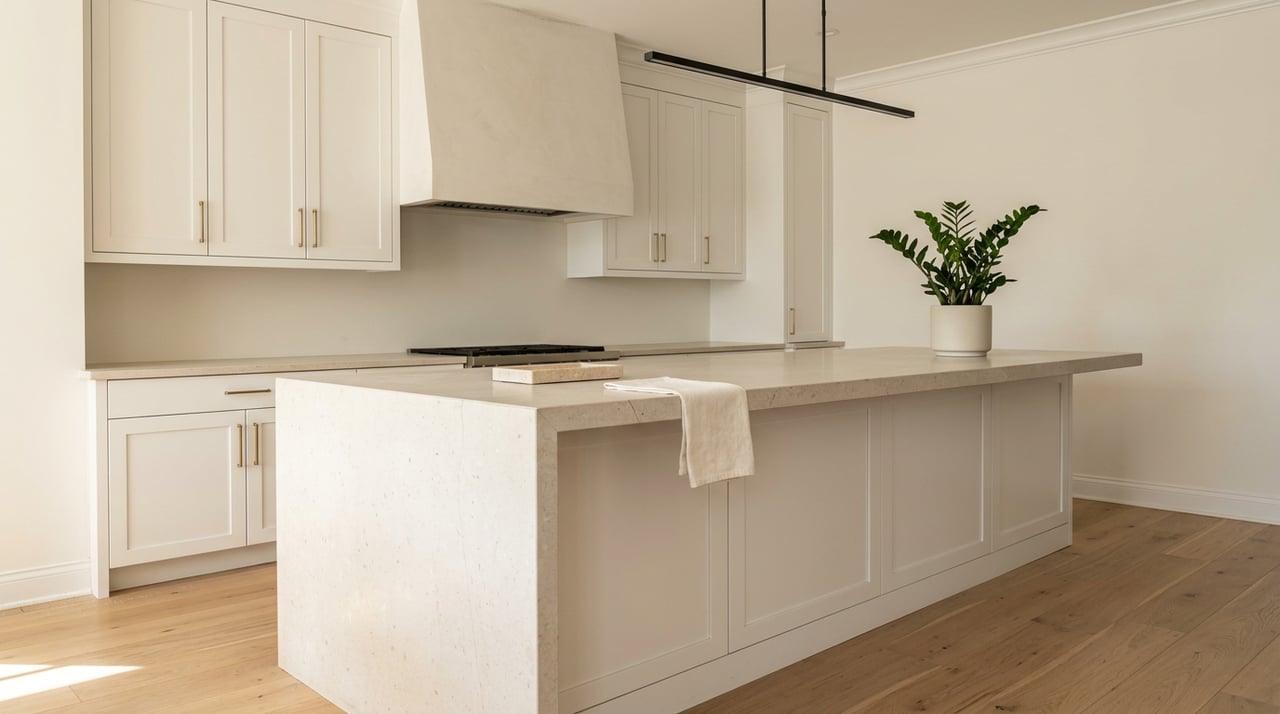
Pricing A Cypress Resale When The Builder Down The Street Is Buying Down The Rate
August 6, 2026
August 6, 2026
Walk a Cypress open house this summer and the sticker prices tell one story. A three-year-old resale in Bridgeland's Parkland village lists at $465,000. A brand-new Perry Homes inventory house a mile away in Prairieland shows $479,000. The resale looks like the deal. It usually isn't, and understanding why is the difference between selling in 30 days and joining the 45.7% of active Cypress listings that have already taken a price cut.
The gap that matters in 2026 is not the list price gap. It's the monthly payment gap, and the builder next door is the one who gets to set it.
Your Cypress resale is not competing against the builder's asking price. It's competing against the builder's preferred lender.
Cypress in early 2026 is sitting at a 94.6% sale-to-list ratio, with only about 5.4% of homes closing above list and roughly 45.7% of active listings already reduced at least once. HAR's early-2026 data pegs the Cypress median near $407,500 with an average closer to $470,000, and pending timelines running 38 to 50 days depending on the source. Redfin's broader Cypress cut stretches that pending window to about 68 days.
Read those numbers together and a pattern surfaces. Buyers are showing up. Pending sales for the broader Houston market ran 13% above the prior year in February 2026. What buyers are refusing to do is chase a price. When a Cypress listing crosses day 30, the reduction is usually already priced into the buyer's opening offer, which is how a home ends up closing at 94 cents on the dollar even in a community with strong demand fundamentals like the Toro District announcement at Bridgeland Central.
Here is the mechanism most resale sellers underestimate. When Perry Homes or David Weekley advertises a permanent rate buydown through the builder's preferred lender, they are not shaving a few hundred dollars off a monthly payment. They are moving a buyer from a 6.375% Freddie Mac survey rate to something in the high-4s or low-5s for the life of the loan. On a $450,000 mortgage, that is real money every month, and it compounds against your listing for as long as the builder keeps the promotion open.
| Scenario | List price | Buyer rate | Est. P&I on 80% LTV |
|---|---|---|---|
| Resale, no concessions | $450,000 | 6.375% | ~$2,246 |
| Resale with $15K rate buydown | $450,000 | ~5.625% | ~$2,072 |
| New build, permanent builder buydown | $479,000 | ~4.99% | ~$2,053 |
The new build in that table is $29,000 more expensive on paper and cheaper to own every month. That is the math a payment-sensitive Cypress buyer is running in the parking lot after a showing, and it is the math your listing has to answer.
Not every Cypress resale is competing with a builder. The buyer looking at a mature section of Fairfield or Coles Crossing is often choosing between resale and resale. Where the pressure gets acute is any resale within roughly a ten-minute drive of active builder inventory, which in 2026 means the entire western half of the corridor.
Bridgeland alone spans 11,500 acres across four villages, with active construction concentrated in Prairieland and Creekland and primarily resale inventory in Lakeland and Parkland. Perry Homes carries the deepest current standing inventory, with David Weekley, Highland Homes, Trendmaker and Lennar rounding out the roster. Dunham Pointe brings Coventry, Toll Brothers and Newmark into the mid-to-upper tiers with larger lots. Towne Lake still commands its own premium for the 300-acre waterfront amenity that new construction cannot replicate. Marvida, Avalon at Cypress, and Sunterra layer in additional builder incentives across the value and mid-tier bands.
If your Bridgeland Parkland resale sits in the $450K to $550K band, your comp set is not just the last three closed sales on your street. It is also every Perry Homes and David Weekley inventory home currently sitting in Prairieland with a rate buydown attached, because that is where a real buyer will spend a Saturday before writing on your house.
The builder has a monthly payment advantage on day one. You have a monthly payment advantage in year two, and most listing agents forget to use it.
New construction inside a Cypress MUD gets appraised on the lot value alone in the first tax year. When the improvement rolls onto the roll the following January, the escrow line item can jump substantially, and buyers who financed to a tight debt-to-income ratio feel it immediately. Much of Cypress sits inside MUDs with their own tax rates and water-district disclosures that show up in the buyer's due diligence packet. A stabilized resale with a fully-assessed tax bill and a known MUD rate removes that surprise from the buyer's underwriting.
This is a real selling point. It belongs in your listing description, in the MLS agent remarks, and in the first thirty seconds of an in-person showing. It does not overcome a 150-basis-point rate gap. It does narrow the payment math enough that a well-conditioned resale in a mature section of Cypress Creek Lakes or Miramesa can still win against a comparable Prairieland inventory home.
The sellers who clear in 30 to 40 days in this market are running a specific sequence. The ones who reduce three times over 90 days almost always skipped step one.
The stigma of a reduced listing is measurable. Buyers who watch a home cut twice tend to write offers 3% to 5% below the reduced price, which is how a $475,000 launch ends up closing at $438,000 when a $455,000 launch would have closed at $445,000.
Texas SB 1968 and the NAR settlement took effect on January 1, 2026, requiring a signed buyer representation agreement before an agent gives advice or negotiates. That has quietly reshaped how buyer-agent compensation flows on new construction. Some Cypress builders still pay buyer-agent compensation directly. Others have shifted to buyer-side allowances. Either way, an unrepresented buyer walking a model home is now dealing with someone who works exclusively for the builder, and represented buyers are increasingly the buyer pool your resale is going to close with. Structuring your listing to work cleanly with a represented buyer is no longer optional.
Should I do a pre-listing inspection if I'm competing with new builds? Yes. Buyers comparing a five-year-old Bridgeland resale to a Perry Homes inventory home with a 1-2-10 warranty will discount your home for any deferred maintenance they discover in their own inspection. A pre-listing inspection lets you fix or disclose on your terms rather than in a repair negotiation on day 35.
Are builder incentives negotiable, or are they fixed? The published incentive sheet is the builder's opening position. Standing inventory that has aged past 60 days often has additional room on closing costs, design credits or lot premiums. For a resale seller, this means the builder's true price to a motivated buyer is usually below the advertised number.
What's the single biggest pricing mistake Cypress sellers made in the first half of 2026? Anchoring to 2022 peak comps in a market where 45.7% of active listings have already reduced. The homes that launched inside 2% of current comps sold. The homes that launched 5% to 8% above chased the market down and typically netted less than a correct launch would have delivered.
Selling a Cypress home in 2026 is a pricing problem before it is a marketing problem, and the builder next door is the variable most sellers underweight. If you are thinking about listing in Bridgeland, Towne Lake, Dunham Pointe, or any of the mature Cy-Fair sections, JL Fine Homes will run the builder-incentive math against your specific comps before you set a number. Schedule a consultation and see the payment comparison your buyer is already running.
Stay up to date on the latest real estate trends.


Our philosophy is simple, we'll always ask the right questions, provide the right answers, treat everyone honestly, and only promise what we are confident we can deliver.
JL FINE HOMES
12525 MEMORIAL DR STE 350 HOUSTON TX 77024